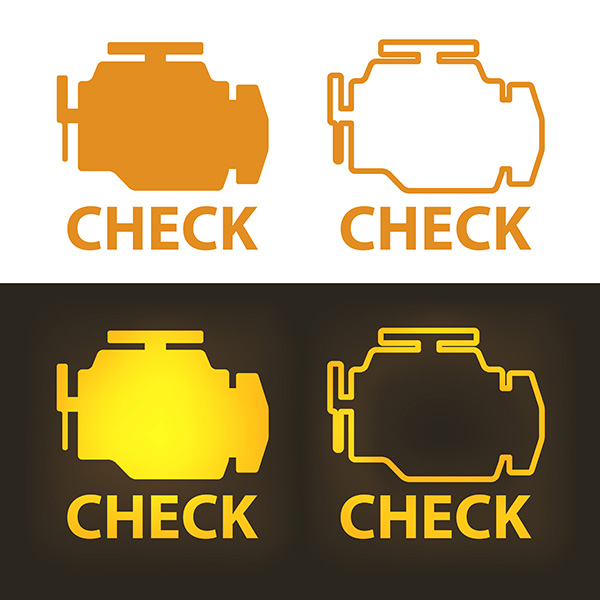
A check engine light can be frustrating because it does not tell you how serious the problem is from the driver’s seat. The car might still feel normal, or it might run rough, hesitate, smell strange, or lose power. Either way, the light means the vehicle’s computer has detected something outside its expected range.
Some causes are simple. Others can become expensive if the car keeps being driven without finding the real source. The light is not there to scare you, but it should not become a permanent part of the dashboard either.
There is a very long list (think hundred or thousand) of reasons your check engine light could be on, but here are a handful that can be pretty common.
1. Loose Or Failing Gas Cap
A loose gas cap is one of the simplest reasons a check engine light can turn on. The fuel system is sealed, and the car checks for vapor leaks as part of its emissions system. If the cap is loose, damaged, missing, or not sealing correctly, the system can detect a leak and trigger the light.
Tightening the cap might solve the issue if it was recently left loose after fueling. If the cap is cracked or the seal is worn, it may need to be replaced. The light will not always turn off immediately, so the vehicle may need a few drive cycles to clear, or it may need to be scanned if the problem persists.
2. Oxygen Sensor Problems
Oxygen sensors monitor exhaust gases and help the engine computer adjust the air-to-fuel ratio. When one reads slowly or inaccurately, the engine can burn too much fuel, run less efficiently, or produce higher emissions. The car may still drive well enough, which is why this repair often gets delayed.
A bad oxygen sensor can also affect other parts if left unchecked long enough. Fuel control problems can put extra stress on the catalytic converter, reduce fuel economy, and cause premature wear on the catalytic converter. Replacing the sensor without testing first is not the best move, though. Exhaust leaks, wiring problems, and engine performance issues can sometimes create similar codes. So, having this properly diagnosed is very important.
3. Catalytic Converter Trouble
The catalytic converter helps clean the exhaust before it leaves the vehicle. When the check engine light points in this direction, drivers may notice sluggish acceleration, reduced fuel economy, a sulfur-like smell, or a car that struggles at higher speeds. In other cases, the only clue at first is the warning light.
Catalytic converter codes deserve careful diagnosis because the converter is not always the original cause. Misfires, rich fuel mixture, oil burning, coolant burning, or ignored sensor problems can damage the converter over time. A proper inspection should look for what harmed the converter, not just whether the converter is no longer working well.
4. Spark Plug Or Ignition Coil Failure
Spark plugs and ignition coils ignite the fuel mixture in the engine. When one fails, the engine can misfire. That can feel like shaking at idle, hesitation during acceleration, reduced power, or a flashing check engine light if the misfire is severe.
A misfire should be handled quickly. Unburned fuel can enter the exhaust and overheat the catalytic converter. That is why a flashing check engine light is more urgent than a steady one. If the light is flashing, it is safer to stop driving and have the vehicle checked before the problem grows.
5. Mass Airflow Sensor Issues
The mass airflow sensor measures the amount of air entering the engine. The computer uses that information to calculate fuel delivery. If the sensor is dirty, failing, or affected by an air leak, the engine can run too rich or too lean.
Symptoms can include rough idle, poor acceleration, stalling, lower fuel economy, or hard starting. A dirty air filter or intake leak can also affect readings, so the sensor should not be blamed without testing. Regular maintenance helps here because a clean air filter and well-sealed intake system give the engine better information to work with.
6. EVAP System Leaks
The EVAP system keeps fuel vapors from escaping into the air. It includes the gas cap, hoses, purge valve, vent valve, charcoal canister, and related lines. A small leak in this system can turn the check engine light on even when the car feels completely normal.
That is what makes EVAP problems easy to ignore. The car may start and drive fine, but it still has an emissions fault that needs to be found. Small leaks can be hard to spot without the right testing, and replacing random parts can waste money fast. A smoke test or system check can help locate the leak more accurately.
Get Check Engine Light Diagnostics In Gaithersburg, Libertytown and Columbia Auto Pros
If your check engine light is on, Auto Pros will not just scan the system, but also investigate, test and diagnose the cause, and explain what needs attention before the problem gets worse.
Do not keep driving with a warning you don't understand. If you see a warning light and don't know what it means, make a quick call to Auto Pros for immediate advice, or make an appointment at autopros.us.